

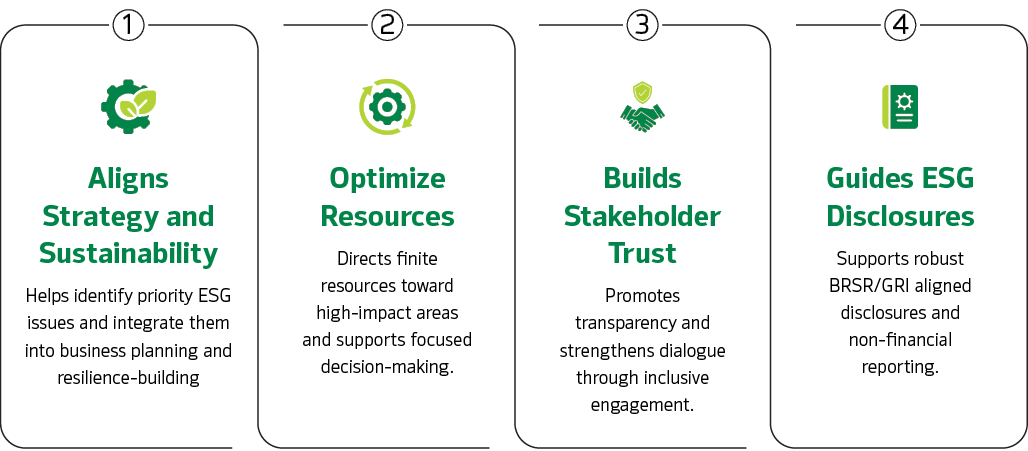
Importance of the Materiality Assessment Process
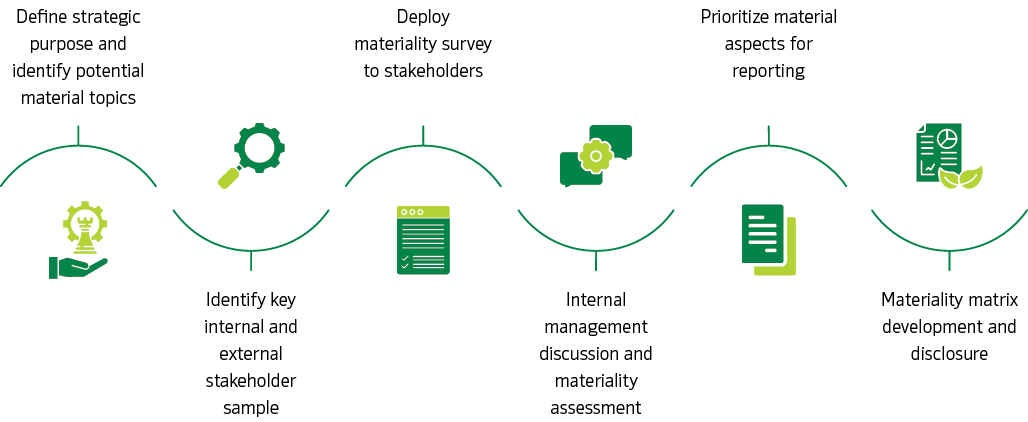
Our Materiality Assessment Process
We follow a thorough six-step process based on top global sustainability reporting standards and best practices.
Materiality Matrix
The Bank’s materiality assessment highlights governance and social priorities, reflecting the importance of trust, security, regulatory compliance, ethical conduct and customer-focused service in the banking sector. These areas are closely aligned with stakeholder expectations and our day-to-day operations.
Governance topics such as cybersecurity, financial performance, regulatory compliance, fraud risk management, and customer satisfaction are considered highly material by both stakeholders and management, underscoring their strategic significance. Social factors, including employee wellbeing, diversity, and inclusion, occupy a moderate position, with management placing particular emphasis on employee training and development.
Environmental considerations, including climate change, carbon footprint management and waste management remain relevant to the Bank’s sustainability approach and long-term commitments. While governance and social issues currently represent the most immediate priorities for core banking operations, environmental responsibility continues to be integrated across operations and business activities. Efforts focus on improving energy efficiency, managing resources responsibly, and supporting sustainable finance. These aspects are addressed through dedicated programs, policies, and disclosures that reinforce the Bank’s long-term sustainability objectives.
The materiality matrix has been revisited and updated to reflect evolving stakeholder priorities and business context. Moving forward, the Bank aims to enhance environmental considerations, strengthen stakeholder engagement, and integrate key ESG priorities more thoroughly into its business strategy, reporting frameworks, and performance objectives, developing a sustainability approach that matches its scale.